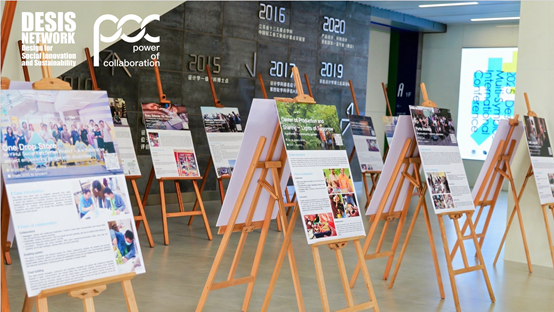
Theme: Collaboration between people as a way to break isolation, build new social networks, and achieve results that advance the transition toward ecological and just societies.
Summary:
From the very beginning of the journey that led to DESIS, the common thread in what we called transformative social innovation was the observation that, at its core, there were people who, defying the prevailing tendencies toward isolation and competition, chose to collaborate. That is, they found a way to do something together that seemed important to them, for themselves, for their community, and for the planet.Nearly two decades later, we feel it's necessary to return to this initial observation and update it. This is for three main reasons.
The first, and most obvious, reason is that we need to see how those collaborative activities, which we observed in their nascent phase and which are now mature, have evolved over time. This topic has certainly been observed and discussed step by step in recent years. However, it's useful to try to provide an overview today and observe current trends.
The second reason is that the spread of digital technologies and connectivity, while accelerating processes of individualization and the crisis of traditional social forms, has also offered unprecedented tools to support collaboration. But that's not all. It has also changed the people who collaborate: those who collaborate today, in some ways, are anthropologically different from those who did so years ago. Furthermore, the expansion of artificial intelligence (and its future integration with robotics) will certainly amplify these phenomena, opening up unprecedented problems and opportunities and requiring us to pay greater attention to the emerging forms of collaboration that will most likely appear.
The third reason for addressing this topic is the need to redefine its meaning in diverse cultural contexts. In past years, we have used the term "collaboration" in different regions of the world as if it had the same meaning everywhere. Over time, however, it has emerged that this was not the case: the transformative collaboration we are addressing exists everywhere, but it has different meanings, stems from different motivations, and implements equally diverse practices. What we need to do today is better understand how this happens: how are collaborative relationships perceived and practiced in different cultural contexts? What is universal and what is culturally specific in the ways they are realized? What can design do to stimulate and support both this universal and context-specific dimension?
Within this framework, with these motivations, and with this perspective, we have launched a new Thematic Cluster entitled The Power of Collaboration.
Partners:
Jiangnan University DESIS Lab (Wuxi, China), Miaosen Gong and Yumei Dong, serve as technical secretariat
Aalborg DESIS Lab (Copenhagen, Denmark), Nicola Morelli
Aveiro University DESIS Lab (Aveiro, Portugal), Teresa Franqueira
Knust Kumasi DESIS Lab (Ghana), Ralitsa Debrah
NID (Ahmadabad, India), Amresh Panigrhai
Tsinghua (Beijing, China), Fang Zhong
UFRJ DESIS Lab (Brazil), Carla Cipolla
Polimi DESIS Lab (Milano, Italy), Daniela Selloni, Daniela Sangiorgi, Stefana Broadbent
UAL DESIS Lab (London, UK), Adam Thorpe
To be added
Planned period: September 2025-October 2027
Coordination team
Yumei Dong, Jiangnan University, [email protected],
Miaosen Gong, Jiangnan University, [email protected]
Ezio Manzini, DESIS network, [email protected]
For more information:
PoC proposal booklet (download)
Previous cases collection (download)
DESIS events on PoC at Jiangnan University Oct. 2025
DESIS events on PoC at University of Johannesburg, Nov. 2025
DESIS workshop on “Scaling up” at Jiangnan University, Dec. 2025
Call for participation of DESIS TC_PoC
 ENGLISH